
…. there was always confusion, joy and a lot of mutual affection.
I met my Sicilian husband’s Nonna (grandmother) during my first visit to the island for the Christmas holidays. We had only been dating for a few months by that point, but I found myself, Christmas Eve, sipping a few glasses of chilled prosecco at Zia Miche and Zio Nino’s house for their annual evening of scacciata (closed pizza with various fillings, my favourite being broccoli, olives, and tuma - a local specialty cheese, quite chewy and delicious) and crispelle (fried balls of batter filled with fresh, unctuous ricotta or anchovies… yes, you read that right). This is a family tradition, a casual but still celebratory affair before the bigger festivity the day after. A long table saw two special guests at the head, naturally, Nonni (grandparents). I still remember being beholden to observe how graceful and elegant they both were. Nonno (grandfather) in a full three-piece suit, and Nonna in a dark blue dress with a beautiful broach. With my non-existent Italian, I tried my best to engage and make the best impression I could, but with the language barrier I wasn’t sure if I succeed. A few days later upon arrival for another family tradition of New Years Day lunch, Stefano went to embrace his Nonna, but she just gave him a stern look and pushed him aside. She then looked at me, smiled, and gave me a warm, welcoming embrace. Stefano’s ego was slightly bruised, but that was the moment we both knew… I was in!
My wonderful mother-in-law, Domenica Monaco, or Mimma as she is affectionately known by friends and family, has written this beautiful reflection of her mother, Ms Angelina. A legend of a woman who is a mother to five children, grandmother to ten grandchildren, and great-grandmother to two great-grandchildren. Mimma wanted to reflect on two staples of the Sunday lunch table, spanning years and now generations of ritual. With one dish having an unexpected, but essential, piece of equipment. You’ll guess it when you see it*.
This is a story of Southern Italian family gatherings, continued traditions, and confusion.
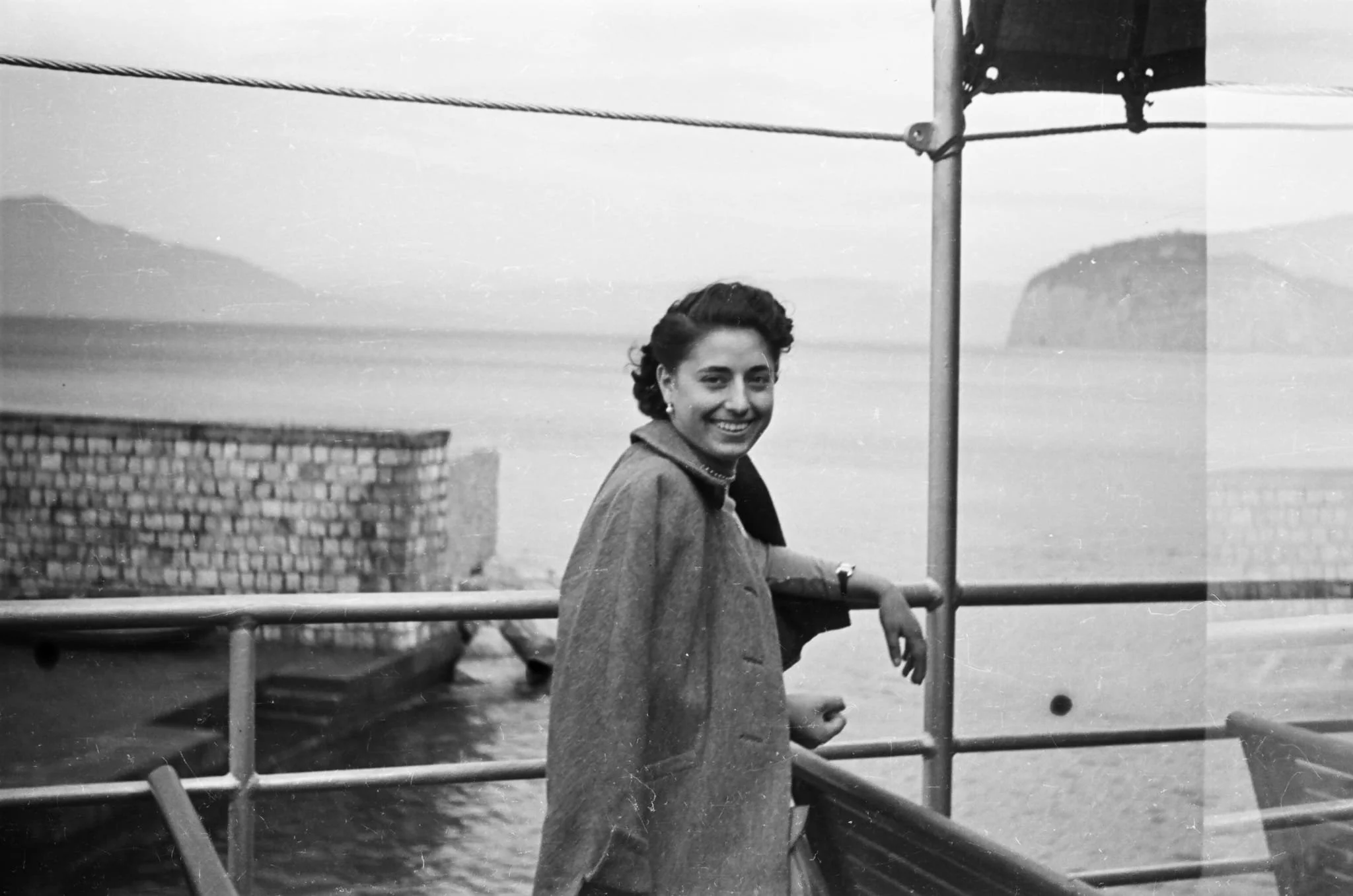
Bisnonna Lina, Timeless Elegance
*English translation below
Appartengo ad una famiglia numerosa: mamma, papà e cinque figli. Quando eravamo ancora ragazzi e stavamo a casa con i miei genitori, il momento del pranzo era il più importante della giornata perché era l' unico momento in cui ci ritrovavamo tutti assieme. Ma spesso al nostro tavolo eravamo più di sette persone. Infatti la domenica venivano a pranzo la nonna, gli zii, i cugini . Poi, nel periodo della loro adolescenza, i miei fratelli arrivavano sovente a casa con qualche amico. Più tardi si sono uniti fidanzati e fidanzate, poi diventati mariti e mogli, e di conseguenza si sono aggiunti i nipotini.
Ho ricordi bellissimi di questi incontri attorno al tavolo da pranzo, dove c’era sempre confusione, allegria e tanto affetto reciproco. E c’era una persona che ci aspettava facendoci trovare sempre qualcosa di buono e di caldo da mangiare: la nostra stupenda mamma, che senza fare una piega ci accoglieva tutti con un sorriso ed il piatto colmo di appetitose pietanze.
Nessuno di noi, a quel tempo, si è mai posto il problema di quale impegno e fatica questo significasse per lei.
Adesso continuiamo ad incontrarci, soprattutto nelle festività, e ad ogni incontro non possiamo fare a meno di chiederci quali poteri sovrumani possedesse mia mamma per affrontare e soddisfare con paziente costanza l' appetito e la voracità della nostra orda famelica.
Naturalmente aveva i suoi segreti: ad esempio per il pranzo della domenica preparava sempre in anticipo delle pietanze da riscaldare al momento di mettersi a tavola. Due di queste pietanze erano la sua “Pasta al forno”, preparata con una ricetta semplice ma golosa, ed il suo “Polpettone al sugo” con contorno di piselli e purè di patate.
In famiglia ricordiamo sempre la bontà della “pasta al forno” e del “polpettone” di mia mamma e per questo propongo questi piatti, sicura che avranno un grande successo tra gli estimatori della cucina siciliana e che porteranno allegria nei momenti di convivialità di chi avrà voglia di provarli.
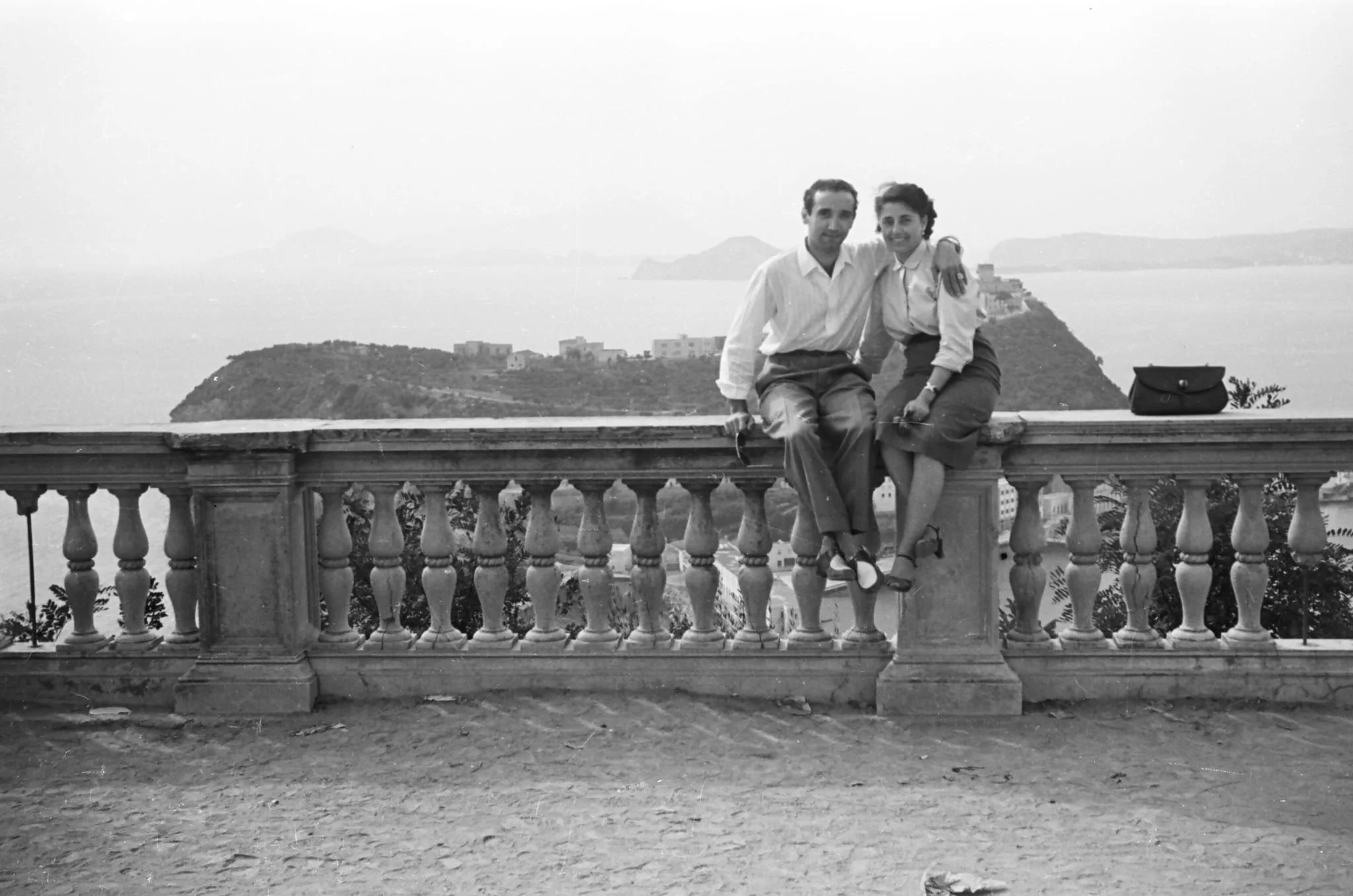
Bisnonni, a few years back
I belong to a large family: mom, dad and five children. When we were still kids and we were at home with my parents, lunch time was the most important moment of the day because it was the only time when we all got together. But often we were more than seven people at our table. In fact, on Sundays our grandmother, uncles, cousins came for lunch. Then, in their teenage years, my siblings would often came home with a few friends. Later boyfriends and girlfriends joined, then became husbands and wives, and consequently the grandchildren were added to the tribe.
I have beautiful memories of these meetings around the dining table, where there was always confusion, joy and a lot of mutual affection. And there was a person who was waiting for us, always making sure we found something good and warm to eat: our beautiful mother, who welcomed us all with a smile and a plate full of appetizing dishes. None of us, at that time, ever asked ourselves what commitment and effort this meant for her.
Now we continue to meet, especially on holidays, and at each meeting we cannot help but wonder what superhuman powers my mother possessed to face and satisfy with patient constancy the appetite and voracity of our ravenous horde.
Of course, she had her secrets: for example, for Sunday lunch she always prepared dishes in advance to be heated at the time of sitting down at the table. Two of these dishes were her Pasta al forno (baked pasta), prepared with a simple but delicious recipe, and her meatloaf with sauce, accompanied always with a side of peas and mashed potatoes. In the family we always remember the wonderful taste of my mother's baked pasta and meatloaf and for this reason I decided to share these dishes, knowing that they will be a great success among the admirers of Sicilian cuisine and that they will bring joy to the moments of conviviality of those who want to try them.
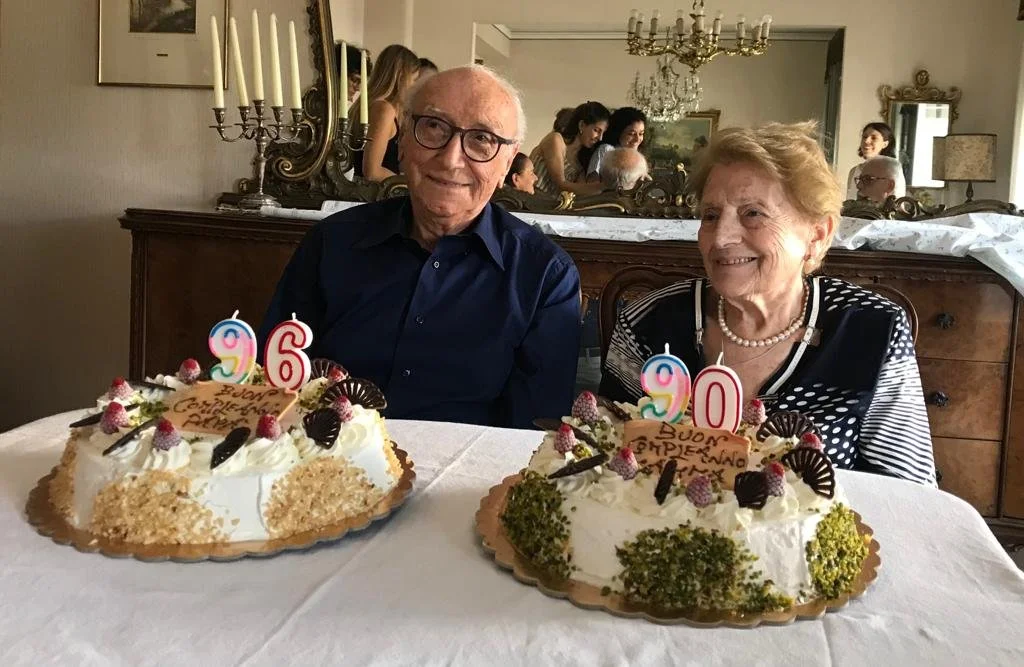
Bisnonni celebrating another blessed birthday - 2021
*English translation follows each recipe
Pasta Al Forno di Nonna Lina
Ingredienti per 4 persone
350 g mezzi rigatoni o qualsiasi altro tipo di pasta corta
600 g passata di pomodoro
250 ml besciamella
250 g mozzarella a cubetti
60 g parmigiano grattugiato
½ cipolla
q.b. olio extravergine di oliva
q.b. sale fino
Preparazione
In una padella facciamo soffriggere mezza cipolla tritata nell’olio di oliva.
Ora aggiungiamo la passata di pomodoro, saliamo a piacere e lasciamo cuocere per circa 10 minuti, mescolando di tanto in tanto.
Nel frattempo, appena l’acqua per la pasta inizia a bollire, saliamo e buttiamo i mezzi rigatoni.
Scoliamo la pasta a metà cottura e versiamola nella padella con parte del sugo.
Uniamo parte del parmigiano grattugiato e mescoliamo.
Teniamo da parte un po' di sugo e di parmigiano grattugiato per il condimento interno e per la gratinatura finale.
Ora mettiamo uno strato di pasta in una pirofila imburrata e distribuiamo sulla superficie il sugo, la besciamella, la mozzarella e un po' di parmigiano grattugiato.
Ricopriamo con un altro strato di pasta e distribuiamo ancora sulla superficie il sugo, la besciamella, la mozzarella e il parmigiano grattugiato rimasti.
Inforniamo e lasciamo cuocere in forno ventilato a 180 °C per circa 25 minuti o in forno statico a 190 °C per lo stesso tempo.
**
Nonna Lina’s Baked Pasta
Ingredients for 4 people
350 g half rigatoni or any other type of short pasta
600 g tomato passata
250 ml béchamel sauce
250 g diced mozzarella
60 g grated Parmesan cheese
1/2 onion
As much extra virgin olive oil as is needed
As much fine salt as is needed
Method
In a pan, fry half a chopped onion in olive oil.
Now add the passata, salt to taste and cook for about 10 minutes, stirring occasionally.
In the meantime, as soon as the water for the pasta starts to boil, add salt and throw in the half rigatoni.
Drain the pasta halfway through cooking and pour it into the pan with part of the sauce.
Add part of the grated Parmesan cheese and mix. Set aside a little sauce and grated Parmesan cheese for the internal seasoning and for the final gratin.
Now put a layer of pasta in a buttered baking dish and spread the sauce, béchamel, mozzarella and a little grated Parmesan cheese on the surface.
Cover with another layer of pasta and spread the remaining sauce, béchamel, mozzarella and grated Parmesan cheese on the surface.
Bake in a fan oven at 180 °C for about 25 minutes or in a static oven at 190 °C for the same time.
Polpettone Al Sugo di Nonna Lina
Ingredienti per 4 persone
Per l’impasto a base di carne
Gr.750 macinato di carne
4 Uova
Gr. 170 Parmigiano (o Grana, grattugiato)
Gr. 150 Mollica di pane raffermo
1 cucchiaino Sale (scarso)
1 tazzina di latte
Per il ripieno
Gr. 130 Prosciutto cotto (5 fette)
Gr. 100 Provola
3 Uova (sode)
Per la cottura
q.b.Olio extravergine d’oliva
700 ml Passata di pomodoro
1 spicchio d’aglio
Strumenti
Tegame largo
Fogli di garza alimentare
Spago da cucina q.b.
Carta forno
Preparazione
Per preparare il polpettone iniziate dalla preparazione dell’impasto a base di carne.
Versate, in una ciotola, la carne macinata e insaporitela con le uova, il formaggio grattugiato e il sale. Mescolate e impastate bene con le mani.
Dopo, aggiungete a poco a poco la mollica di pane raffermo inumidita con poco latte, fino a formare un impasto morbido e non troppo asciutto.
Quando l’impasto è pronto, stendetelo su un foglio di carta forno. Formate un rettangolo.
Al termine, adagiate al centro le fette di prosciutto cotto, il formaggio a fette fini o a cubetti e le uova sode spellate.
Con l’aiuto della carta forno, alzate prima una parte della sfoglia di carne e coprite il ripieno. Poi, alzate l’altra e richiudetelo, formando un rotolo.
Stendete sul tavolo i fogli di garza alimentare della dimensione necessaria ad avvolgere il polpettone.
Appoggiate delicatamente il polpettone sulla garza e avvolgetelo, legandolo bene con lo spago da cucina.
Il polpettone, così legato, manterrà la sua forma, restando ben compatto.
Nel frattempo in un tegame, dove avrete imbiondito uno spicchio d'aglio in un po' d'olio, versate la salsa, aggiungete sale e pepe e portate a bollore.
A questo punto immergetevi il polpettone e fate cuocere per 35-40 minuti.
Finita la cottura lasciate raffreddare il polpettone, quindi eliminate lo spago da cucina e la garza.
Affettate e servite guarnendo il piatto con un po’ di salsa.
**
Nonna Lina’s Meatloaf with Tomato Sauce
Ingredients for 4 people
For the meat base
750 g minced meat
4 Eggs
170 gr. Parmesan cheese (or Grana cheese, grated)
150 g Stale bread crumbs
1 tsp Salt (scarce)
1 cup of milk
For the filling
130g ham (approx. 5 slices)
100 g Provolone or mature scamorza cheese
3 eggs, hard-boiled
For cooking
As much as is needed extra virgin olive oil
700 ml tomato passata
1 clove of garlic
Tools
Wide pan
Food-grade gauze sheets
Kitchen twine to taste
Parchment paper
Preparation
Start the meatloaf by preparing the meat.
Pour the minced meat into a bowl and season it with eggs, grated cheese and salt. Mix well with your hands.
Then, gradually add the stale bread crumbs moistened with a little milk, until a soft and not too dry dough is formed.
Once the dough is ready, roll it out onto a sheet of parchment paper. Shape it into a rectangle.
At the end, place the slices of cooked ham, the finely sliced or diced cheese and the peeled hard-boiled eggs in the center.
With the help of parchment paper, first lift a part of the meat sheet and cover the filling. Then, lift the other and close it, forming a roll.
Spread the sheets of gauze on the table of the size necessary to wrap the meatloaf.
Gently place the meatloaf on the gauze and wrap it, tying it well with kitchen twine.
The meatloaf, thus tied, will keep its shape, remaining compact.
Meanwhile, in a pan, where you have browned a clove of garlic in a little oil, pour the passata, add salt and pepper and bring to a boil.
At this point, dip the meatloaf in it and cook for 35-40 minutes.
Once cooked, let the meatloaf cool, then remove the kitchen twine and cheesecloth.
Slice and serve garnishing the dish with a little sauce.